
20 November 2023
Outlook: Rachael McDonald, CEO

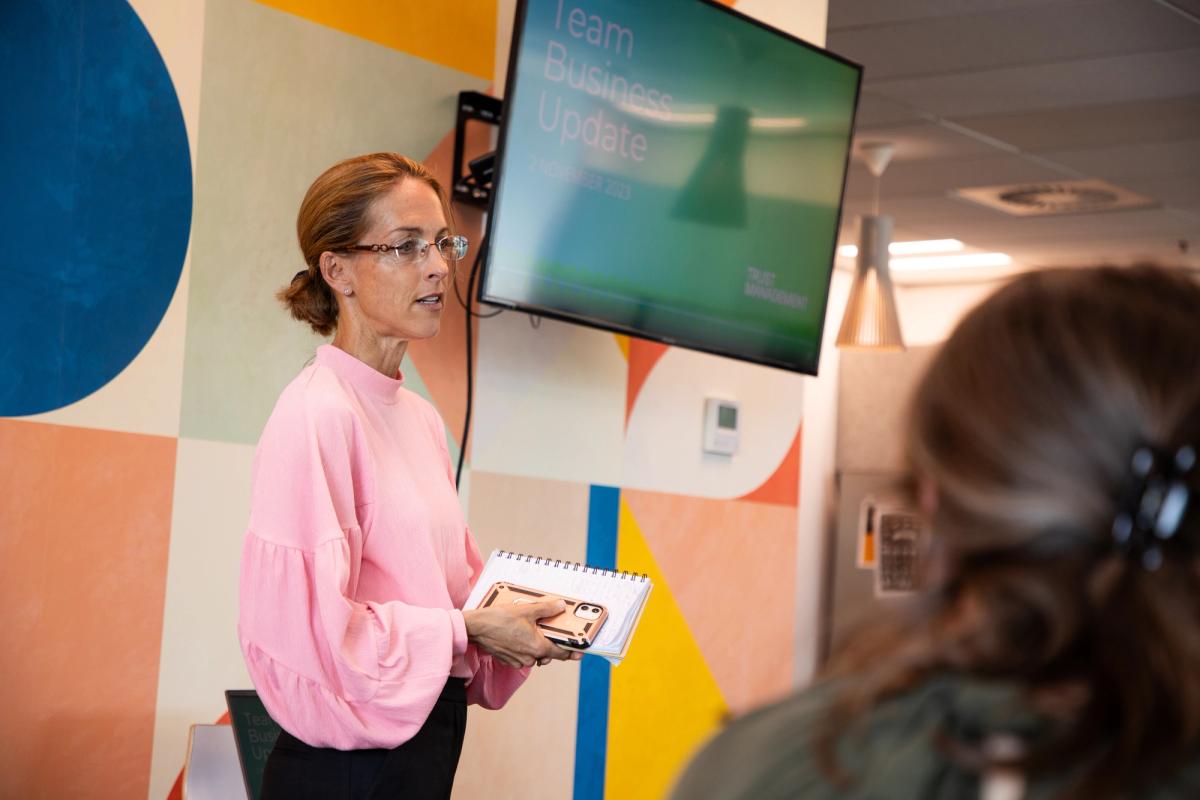
Trust Management’s Outlook series spotlights the issues that matter to New Zealand’s for-purpose sector. We start the series with a profile of Rachael McDonald, Trust Management’s CEO. Rachael joined Trust Management late 2022 following an 18-year stint overseas.
A corporate and finance lawyer by trade, Rachael cut her teeth at Chapman Tripp before heading to the Cayman Islands, where she worked for a year before a devastating hurricane all but flattened the three British Overseas Territories in the western Caribbean Sea.
After six months without electricity or running water, Rachael and husband Mark relocated to the UK, where she joined British multinational law firm Clifford Chance LLC. However, after witnessing the peak of UK’s securitisation markets and the July 7 tube bombings, the pull of island life took the pair to the British Virgin Islands.
Settling on the most populated island, Tortola, Rachael established the local office of UK-headquartered legal services firm Mourant Ozannes. As managing partner, she built and led a team providing legal and advisory services to international clients in all facets of investment, business, finance, regulation, trusts, property, and asset management.
During her decade-long tenure, Rachael was appointed to Mourant’s global board and risk committee. She also cofounded the firm’s diversity and inclusion programme and led her office’s charitable initiative. She also had to pull the lever on a business continuity plan when in 2017 the eye of Category 5 hurricane Cyclone Irma pummelled the islands, laying waste to property and infrastructure, including Mourant’s local office.
Rachael’s reputation in the international legal industry saw her featured on the IFC Powerwomen list from 2017-2020 and the IFLR1000 Women Leader ranking in 2021, honours granted to prominent women lawyers globally.
Since returning home to Aotearoa in 2021, with husband and three children in tow, Rachael was appointed trustee of the Life Education Trust (North Shore) – an organisation that inspires children and young people to make positive and healthy choices.
Q: You have spent most of your professional career in law. Why did you decide to step away from law and into the for-purpose sector? What was the appeal?
RMcD: “I returned to New Zealand looking to start a chapter of my life that had deeper purpose and meaning. Trust Management’s purpose resonated with me, also presenting an opportunity to use my skills and experience to grow a business supporting the for-purpose sector. The sector poses interesting challenges – New Zealand doesn’t have a huge taxpayer base and we’re no Switzerland, which requires our for-purpose organisations to do much of the heavy lifting. I love being part of the ecosystem that serves our communities.”
Q: You’ve been in the role of CEO at Trust Management for 12 months now. Outline some of the biggest surprises about the sector and your work at Trust Management?
RMcD: “The size and diversity of the for-purpose sector really surprised me – there are 28,000 charities operating in New Zealand.There’s also a certain complexity that comes with less regulation – charities in this part of the world operate under a more relaxed regulatory framework. We have tonnes of passionate people who are doing great work. But regulatory latitude often results in duplication. Anyone can set up a charity– and there are hundreds doing great work. But the proliferation of small charities (58% of New Zealand charities raise less than $140,000 a year), such as foodbanks, often leads to duplicated effort. So, there's a huge opportunity for collaboration to improve efficiency. And that’s why businesses like Trust Management are so vital to the sector.We understand the challenges that for-purpose organisations must wrestle, offering advice and services in property management, accounting, financial, and investment. There’s lots to get right to maximise social impact.”
Q: NZ’s charity and wider for-purpose sector is huge, including a significant paid and volunteer work force, major funders, and clients, with a 2018 report estimating that non-profits contributed $12.1 billion to GDP. Broadly, what are main challenges facing the sector? What needs to change?
RMcD: “Beyond duplication of effort and resources, volunteerism will get tricky as demographics change and a new generation of volunteers put their hands up. We’ve got to understand how the next generation wants to engage and contribute to their communities. Certainly, the level of passion and civic mindedness among young people is brilliant. But the question is how do you best harness that and convert it into real impact. It’s one thing to get people involved in the things they’re passionate about and another to ensure they have the right skills so that they’re able to contribute really well.”
Q: Some pundits have claimed that the 25-year-old companies’ legislation is hampering the development of social enterprises in New Zealand. Do you agree? Why?
RMcD: “Some argue that the current legislation doesn’t fully support growth of the social impact sector, for example, suggesting that trustees and directors require more flexibility to explore their social licence to operate and how they work with stakeholders – though recent amendments related to director duties have been helpful. Typically, companies legislation is concerned with directors and companies intent on delivering a profit for shareholders. Purpose-focused companies are not necessarily profit driven, so then how do you measure performance when doing good and serving a broader purpose cannot be expressed as numbers on a spreadsheet.”
Q: The term ‘for-purpose’ is increasingly used in favour of ‘not-for-profit’. What’s the difference and do you think the term ‘not-for-profit’ is past its use-by date?
RMcD: “I think the term not-for-profit carriers a certain baggage. It sounds a little archaic and infers austerity. If a charity is defined as not-for-profit then any surplus must be a terrible thing, whereas the opposite is true for business – profit is good for shareholders and can be reinvested to drive growth and other competitive advantages to make even more money. The second people hear not-for-profit they squint through a different lens – one that scrutinises every dollar spent. This isn’t necessarily healthy and, in fact, can be quite damaging, because certain overheads contribute to running an efficient operation. Cutting corners at all costs is often self-defeating.
“Charities should be defined by their purpose. Don’t be afraid of making a surplus – a profit – because it can be used to change more lives for the better. And just as businesses use names and brands that reflect their broader mission, our sector must take the same position when defining ourselves. Hitching our wagon to for-purpose is far more positive and puts focus where it should be – on the good work we do.”