
9 July 2026
What’s emerged: the ESG themes shaping responsible investing in 2026
The 2026 RIAA Conference revealed five major responsible investing trends shaping Australia and New Zealand, with key implications for trustees.

Every year the Responsible Investment Association Australasia (RIAA) conference is a useful barometer of where responsible investing in Australia and New Zealand is heading. This year’s gathering made one thing clear: several themes we have been calling “emerging” have quietly arrived. Here are five that stood out from the room, and why they matter for the not-for-profits and trustees.
1. Nature has become the new climate
The single biggest shift was the rise of nature and biodiversity alongside climate. Natural capital, the value of healthy soil, water, forests and ecosystems, is increasingly treated as financially material rather than philanthropic.
The Taskforce on Nature-related Financial Disclosures (TNFD), established in June 2021, had drawn more than 620 organisations representing around US$20 trillion in assets by mid-2025. The reason is simple economics:
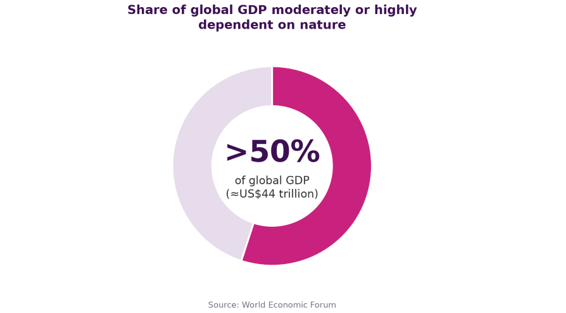 Source: World Economic Forum. More than half of global GDP — about US$44 trillion — is moderately or highly dependent on nature.
The practical message was that climate and nature can no longer be managed in separate boxes: deforestation, water stress and biodiversity loss can each amplify climate risk, and the reverse is also true.
2. From decarbonising portfolios to systemic stewardship
A recurring refrain: “just decarbonising an investment portfolio does not manage the risk you are trying to manage.” While fund managers reducing their portfolio exposures to “high-emitters” can result in lowering a portfolio’s reported carbon footprint, it doesn’t really change anything in the real economy.
The emphasis is instead now shifting towards active stewardship; using engagement and voting to influence how companies might move away from Green House Gas (GHG) Emissions reliance, and towards “systemic stewardship”.This matters more as industry flows continue to move towards index funds that, by design, are often unable to simply sell a holding in a company.
3. Greenwashing, labelling and disclosure are maturing
Much of the conference was also about discipline: Australia’s new Sustainable Finance Taxonomy, the debate over a sustainable-product labelling regime, and regulators’ first reviews of mandatory climate reporting.
This mirrors what we see at home.Earlier in 2026, the Financial Markets Authority (FMA) published updated Sustainability-related disclosure guidance, built around four principles: investment product claims must be clear, substantiated, consistent, and supported by proper oversight of third parties.
For investors, this is good news: it raises the bar on what “ethical” or “sustainable” can credibly mean and makes greenwashing, the practice of making misleading or exaggerated claims about a company's or investment's environmental or sustainability credentials, harder.
4. AI arrives in responsible investing
Artificial Intelligence (AI), and especially “agentic” AI that can act on an analyst’s behalf, featured for the first time as a serious operational topic rather than a curiosity.
The tone was equal parts opportunity and caution; that AI can be genuinely useful for sifting disclosures and mapping scenarios, but that it does require adequate governance, bias testing and, as one speaker put it, a “human at the helm”.
5. The “S” is getting sharper: human rights and First Nations
Finally, the social pillar carried some of the most powerful sessions, modern slavery in supply chains (“risk to people, not just risk to business”) and the rights of Indigenous people and connection to country.Both are increasingly framed as investment risks, not only ethical ones.
What this means for investors
The throughline is that responsible investing is becoming more rigorous, more systemic and more measurable. In New Zealand it also continues to grow; RIAA’s 2024 benchmark put the New Zealand research universe (managers self-declaring responsible investment) at around NZ$294 billion.
For trustees and boards overseeing long term endowments and Putea; that maturing discipline is welcome; it makes an ethical lens easier to evidence and harder to fake.
As RIAA Responsible Investment Leaders for 2026, Trust Investments is proud to be part of setting that standard. We are always happy to kōrero about any of these themes in more depth.
Sources
- RIAA Australian Conference 2026 - author’s notes.
- Taskforce on Nature-related Financial Disclosures (TNFD), 2025 Status Report.
- World Economic Forum - analysis of global GDP dependency on nature (New Nature Economy).
- Financial Markets Authority, Sustainability-related disclosure guidance (2026).
- RIAA, Responsible Investment Benchmark Report Aotearoa New Zealand 2024.
Author: Catherine Bodnar - Investment Analyst, Trust Investments